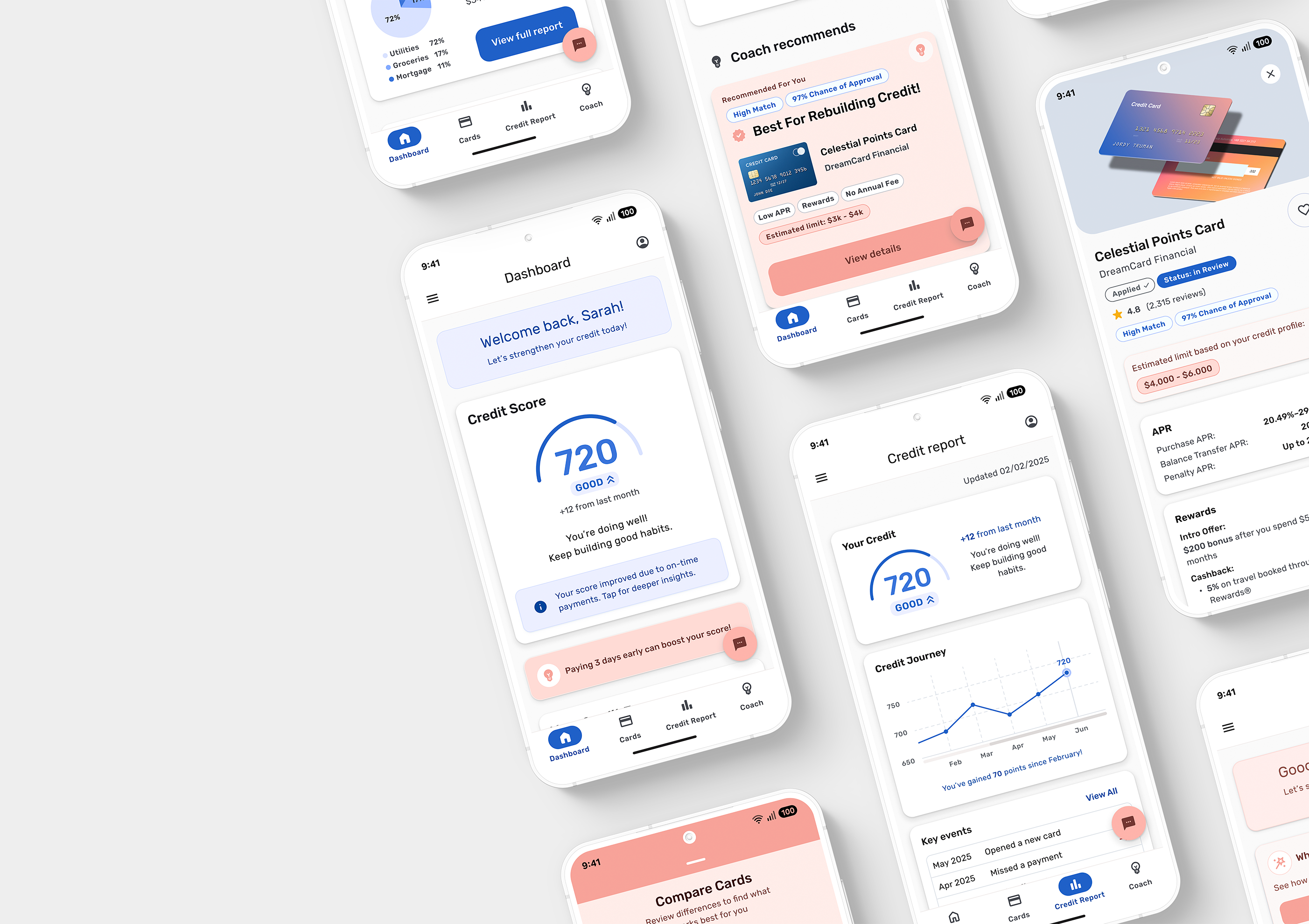
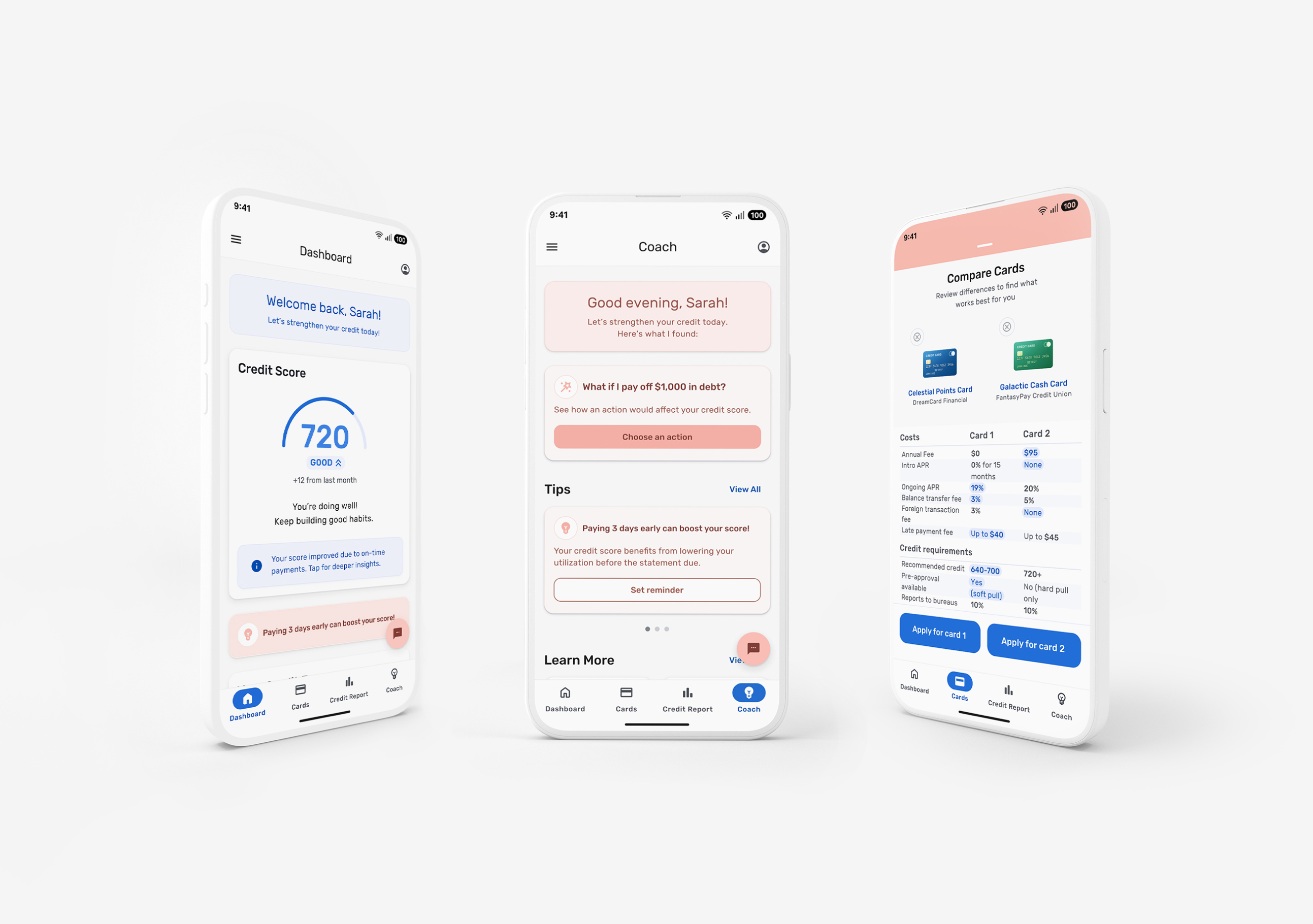
Coach is a conceptual credit-management tool built to strip away ambiguity and anxiety from credit decisions.
Conceptual Study
UX / UI Design
August 1, 2025
Solo UX/UI Designer
Figma, FigJam, Google Sheets, Photoshop

Most credit tools assume users already understand the system. They don’t.
Coach is a conceptual UX case study focused on reducing financial hesitation by making credit impact visible and easier to interpret. The goal was not to build a feature-heavy app, but to explore how clearer structure and contextual explanation could improve confidence in credit decisions.
This project was exploratory in scope and included limited usability validation.
Most credit tools overwhelm people. Users don’t actually understand how credit works or which cards make sense for their situation. The current solutions present complexity without explanation, which makes people unsure and hesitant.
Design an experience that makes credit approachable and actionable. Users should be able to see, interpret, and act on credit info without unnecessary confusion. Confidence should replace anxiety.

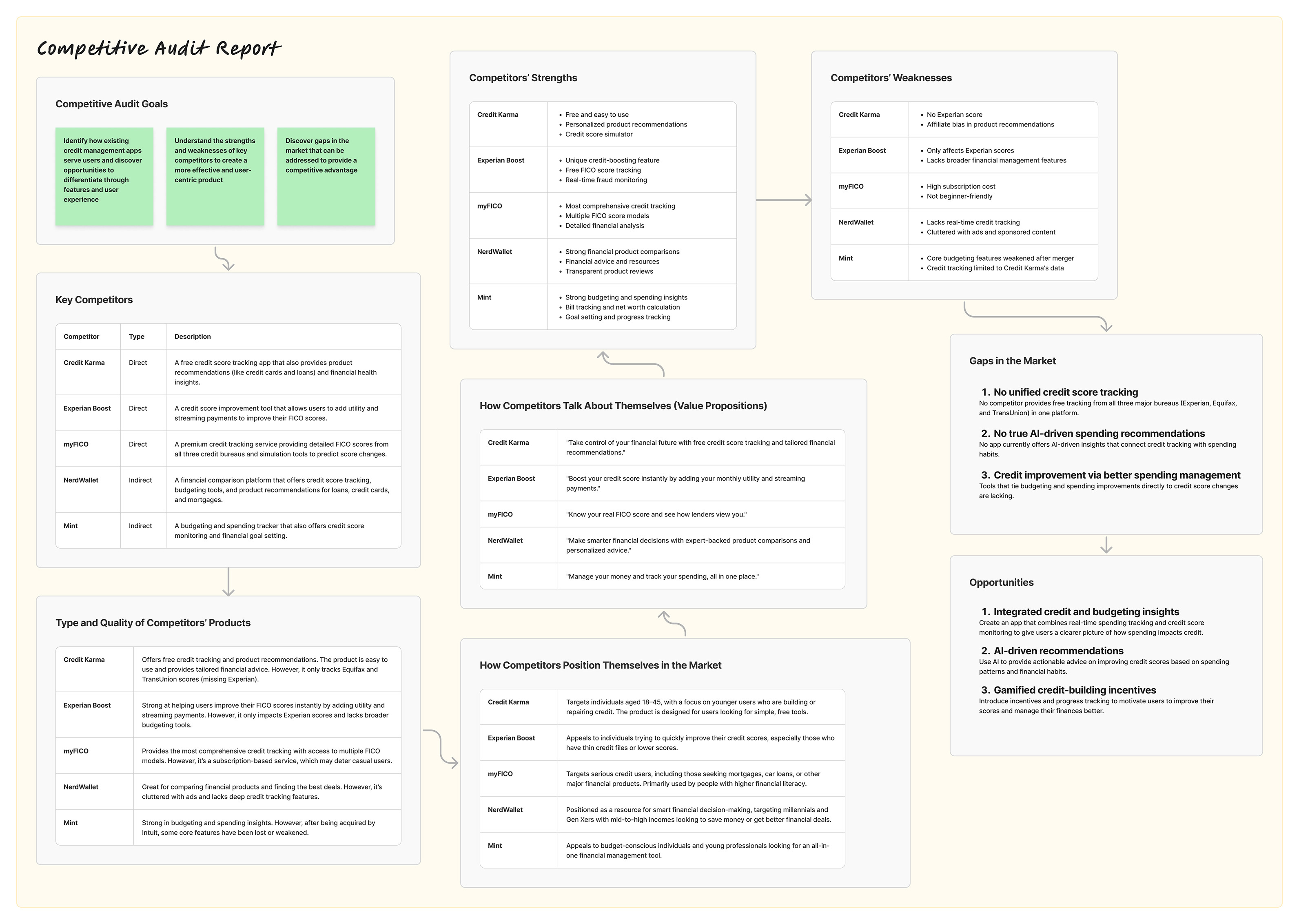
This project began with exploratory research to understand where confusion happens in existing credit tools and why users hesitate to take action.
Methods included:
Because this was a conceptual study, findings are directional rather than statistically validated.
Most credit apps optimize for information density, not comprehension.
Patterns I saw repeatedly:
The result: users hesitate. They understand what their score is, but not what to do next.
That became the core problem to solve.
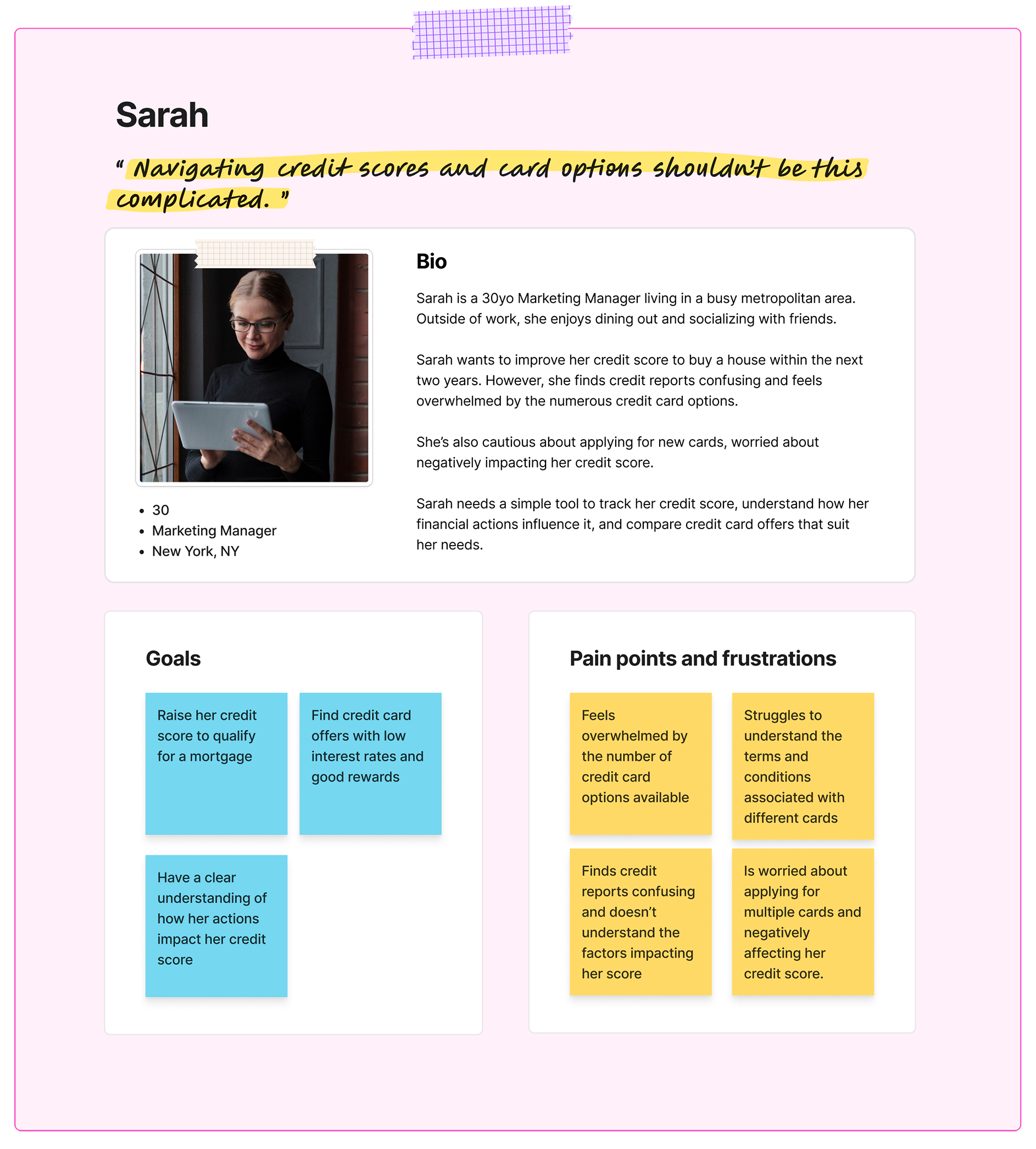
“I’m scared applying will hurt my score, so I just don’t.”
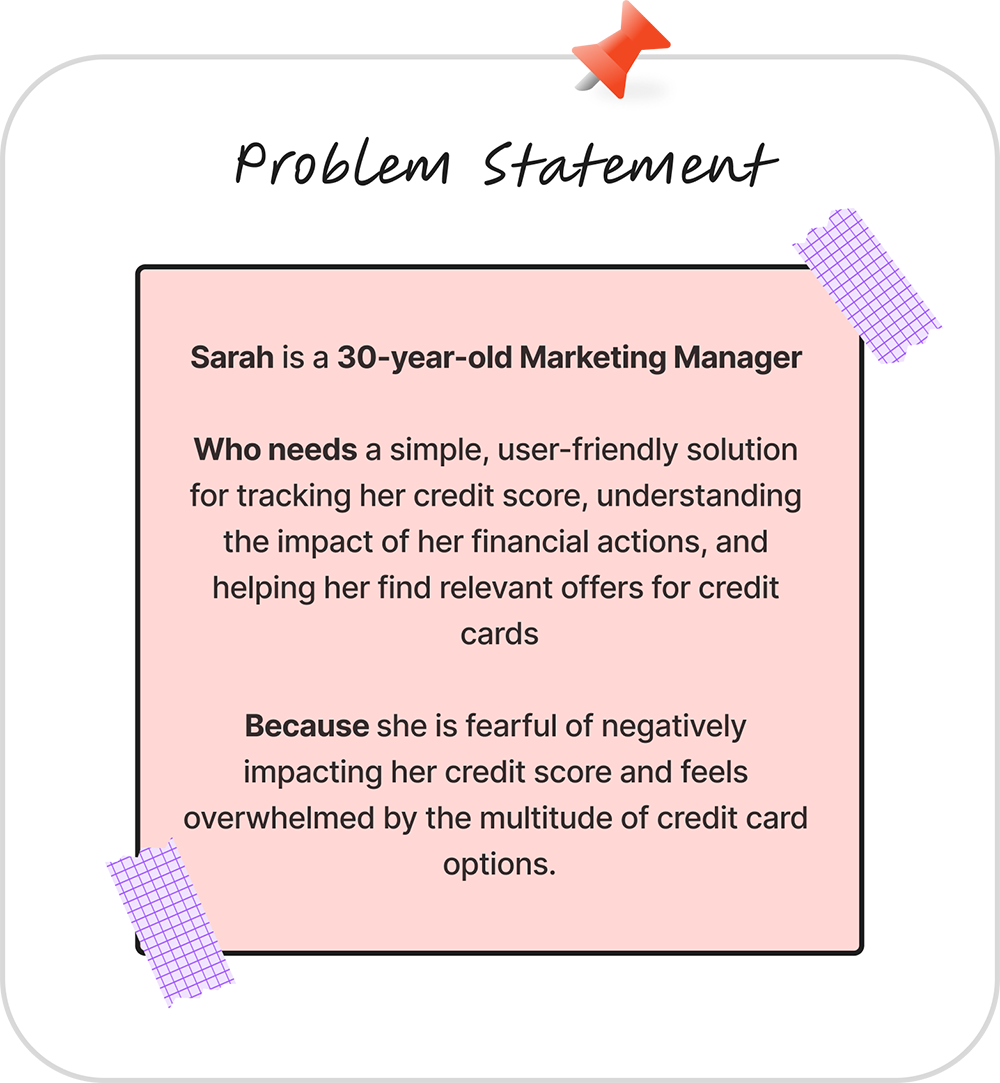
People trying to improve credit feel stuck. They don’t know how actions shift scores, and financial products feel intimidating because existing tools don’t provide enough context, clear explanations, or reassurance. That gap makes users avoid action.

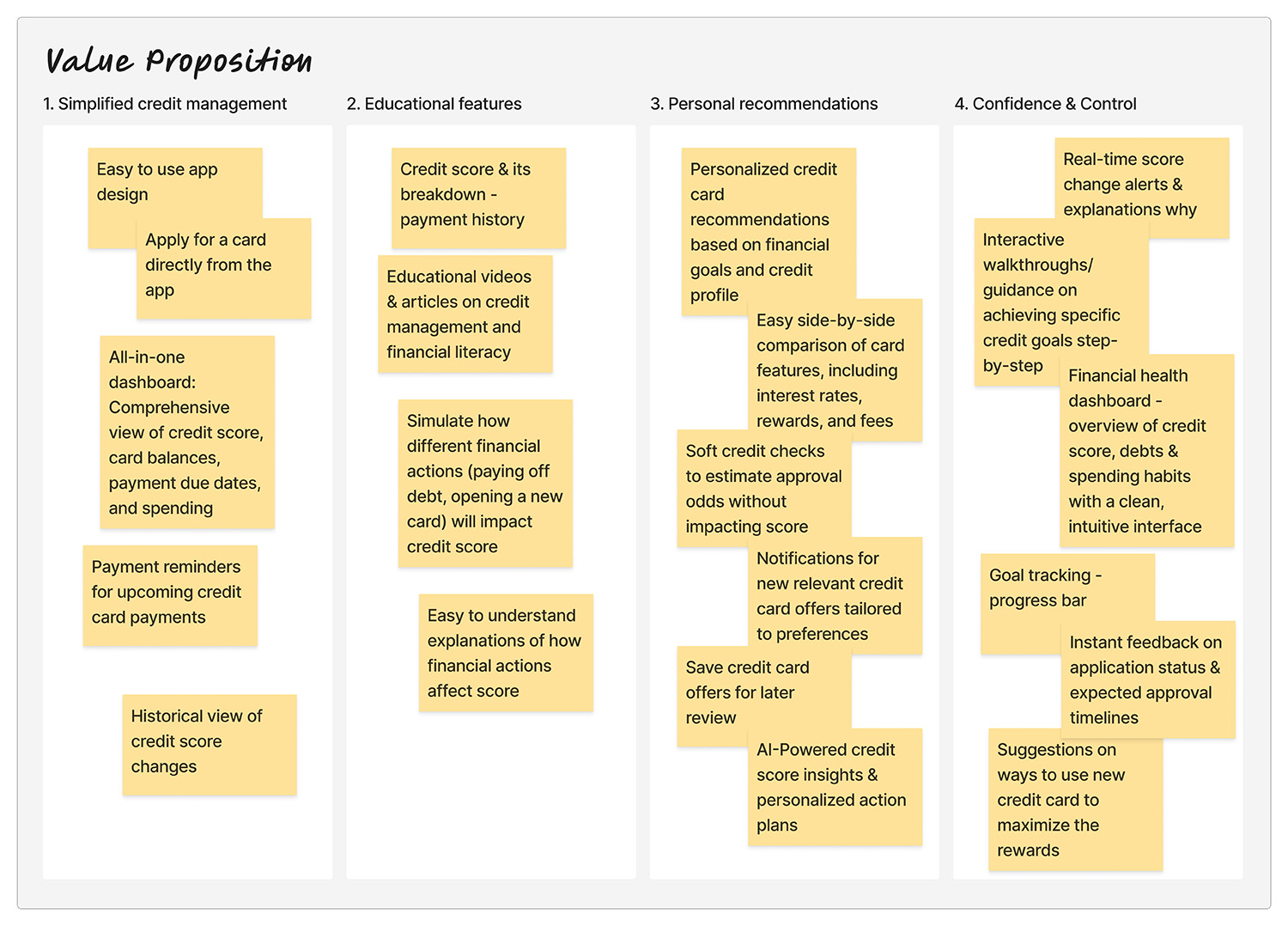
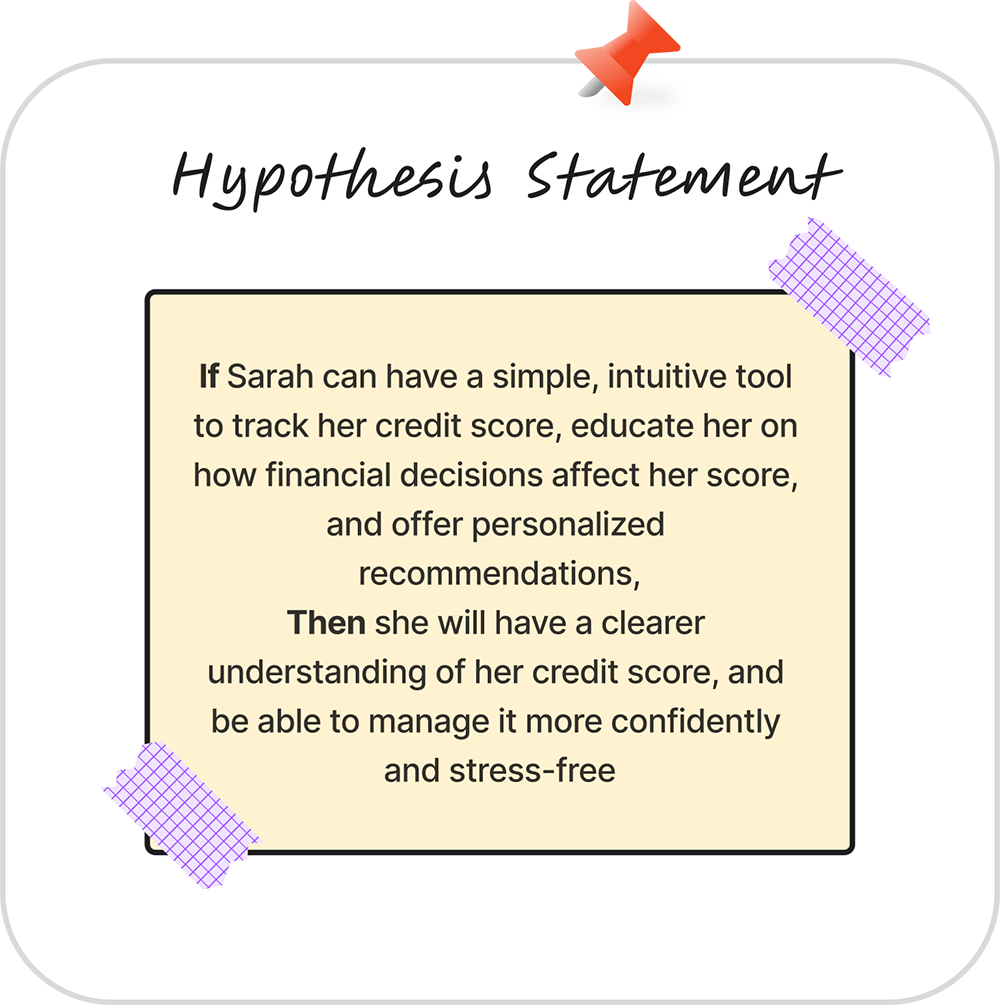
If the app explains credit impacts clearly and tailors guidance to the user, people will feel informed and confident enough to manage their credit and take next steps.

This case study was conceptual in nature. Research included a competitive audit, review analysis of external tools, and one exploratory usability session. Because of the limited sample, insights are directional and intended to inform further investigation rather than generalize to all users.
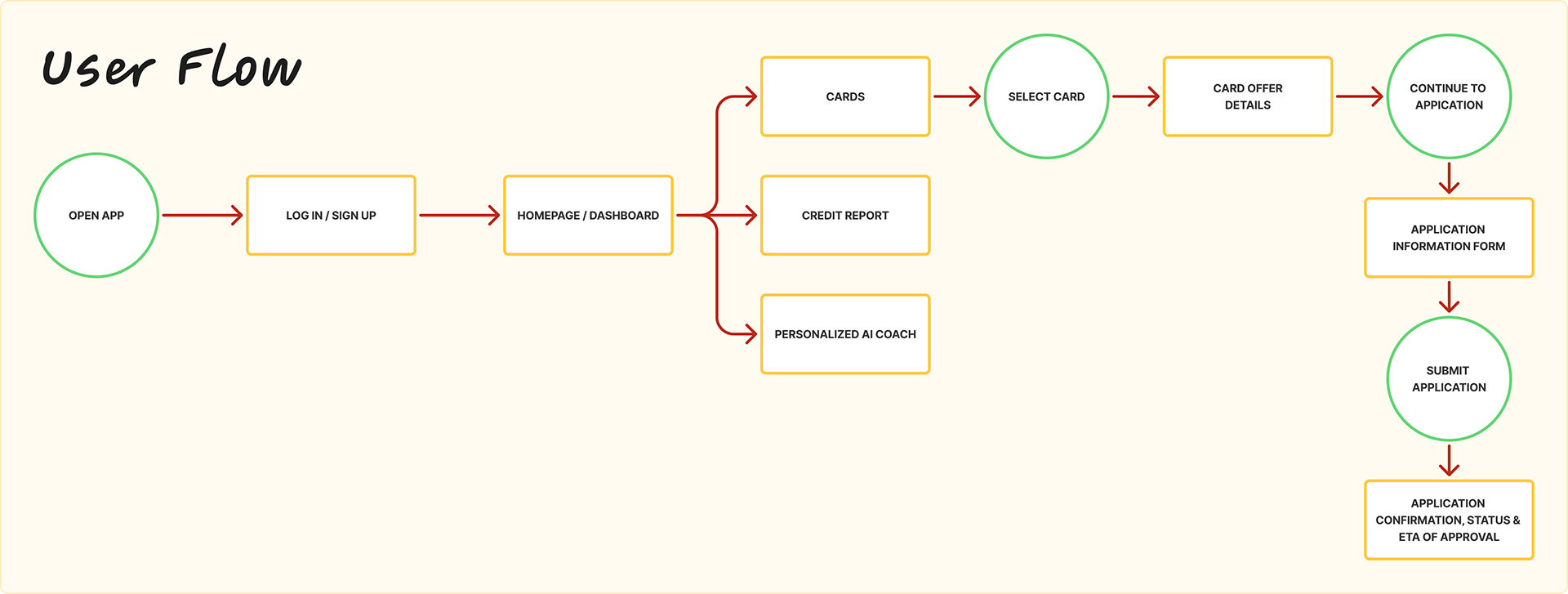
I mapped the journey from uncertainty to decision. That revealed emotional spikes and friction points, letting us refine where clarity delivers the most value.
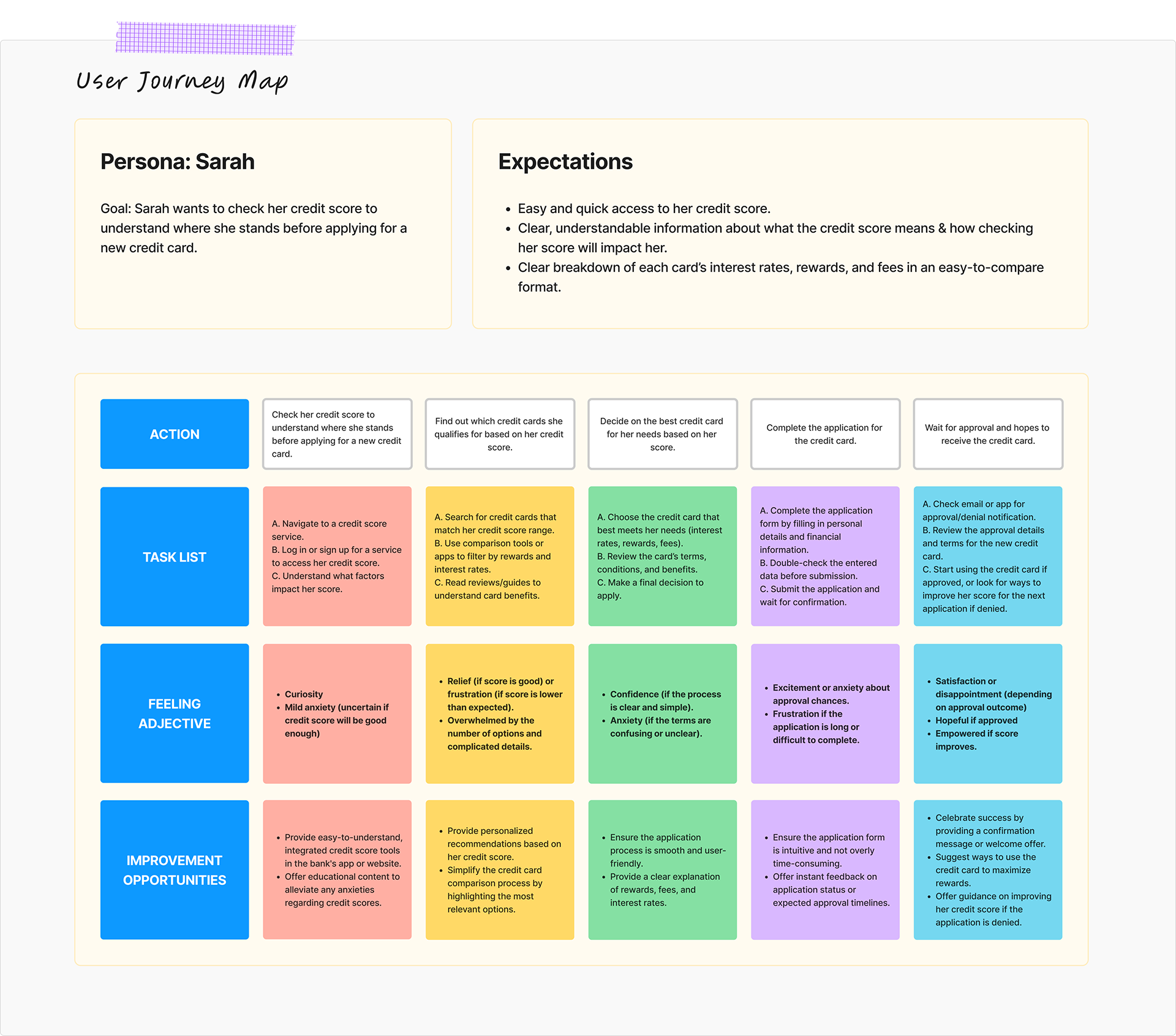
The core journey follows three stages:
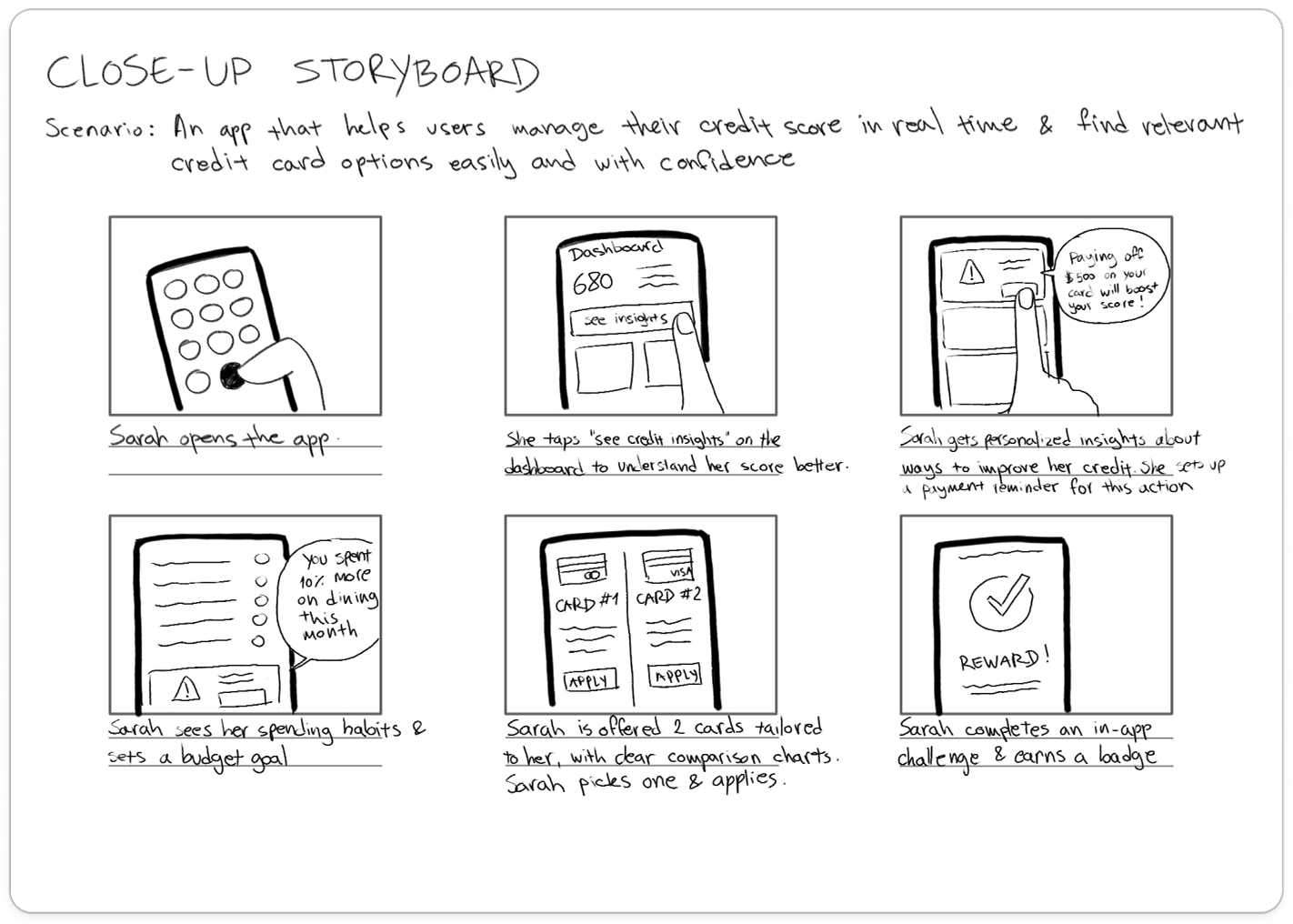
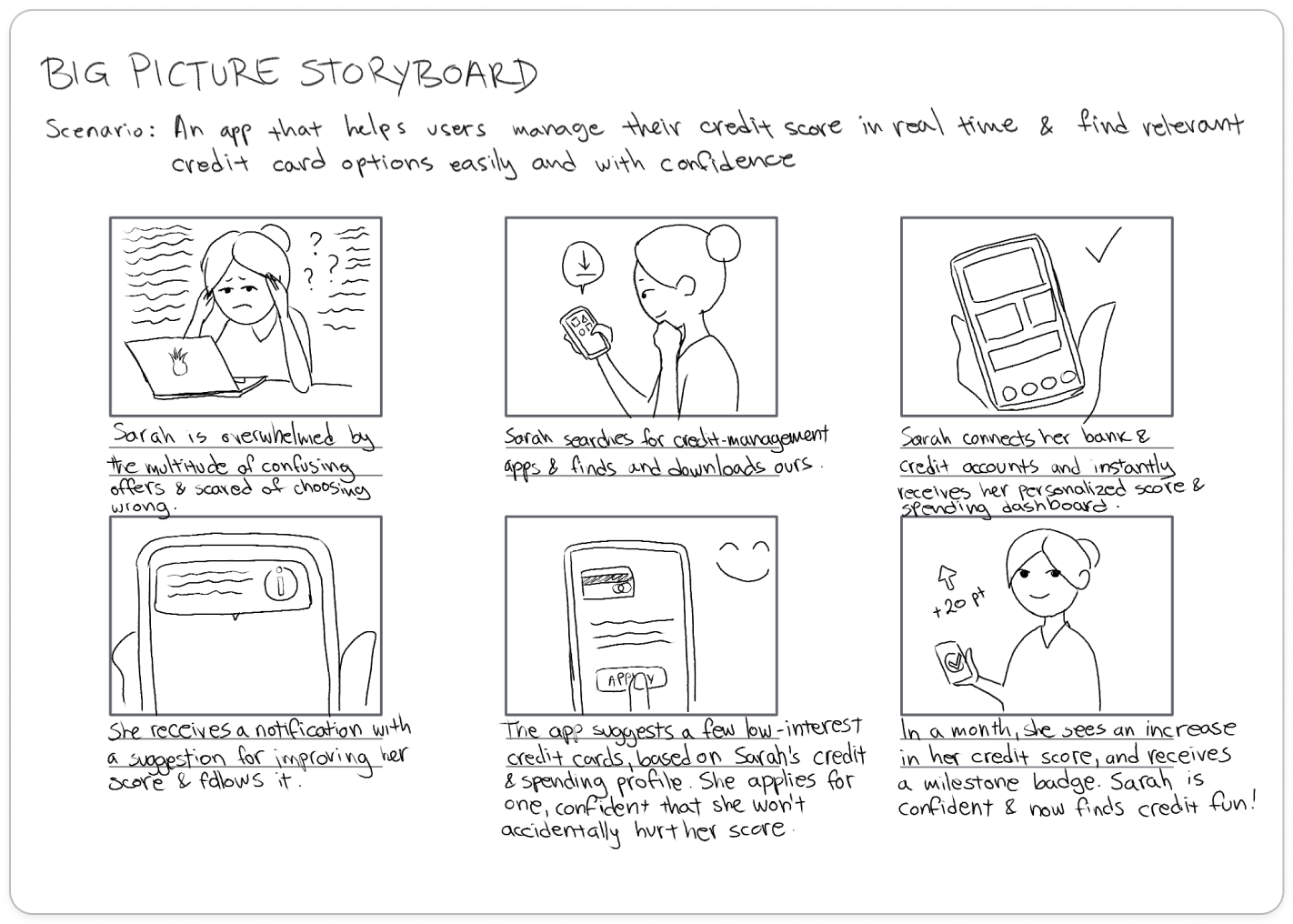
I also created both big-picture and close-up storyboards to visualize user motivation, emotional state, and context at different moments in the experience.
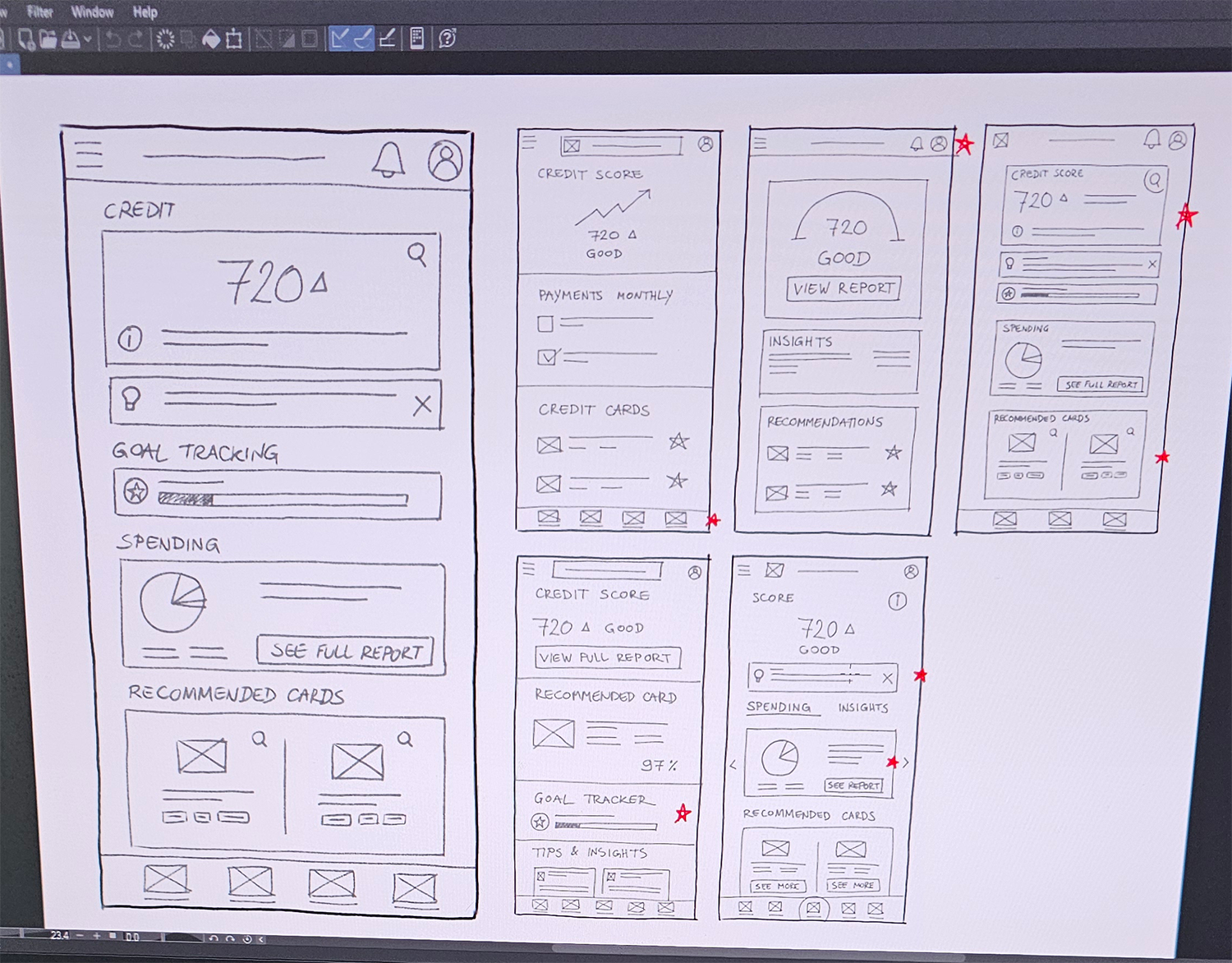
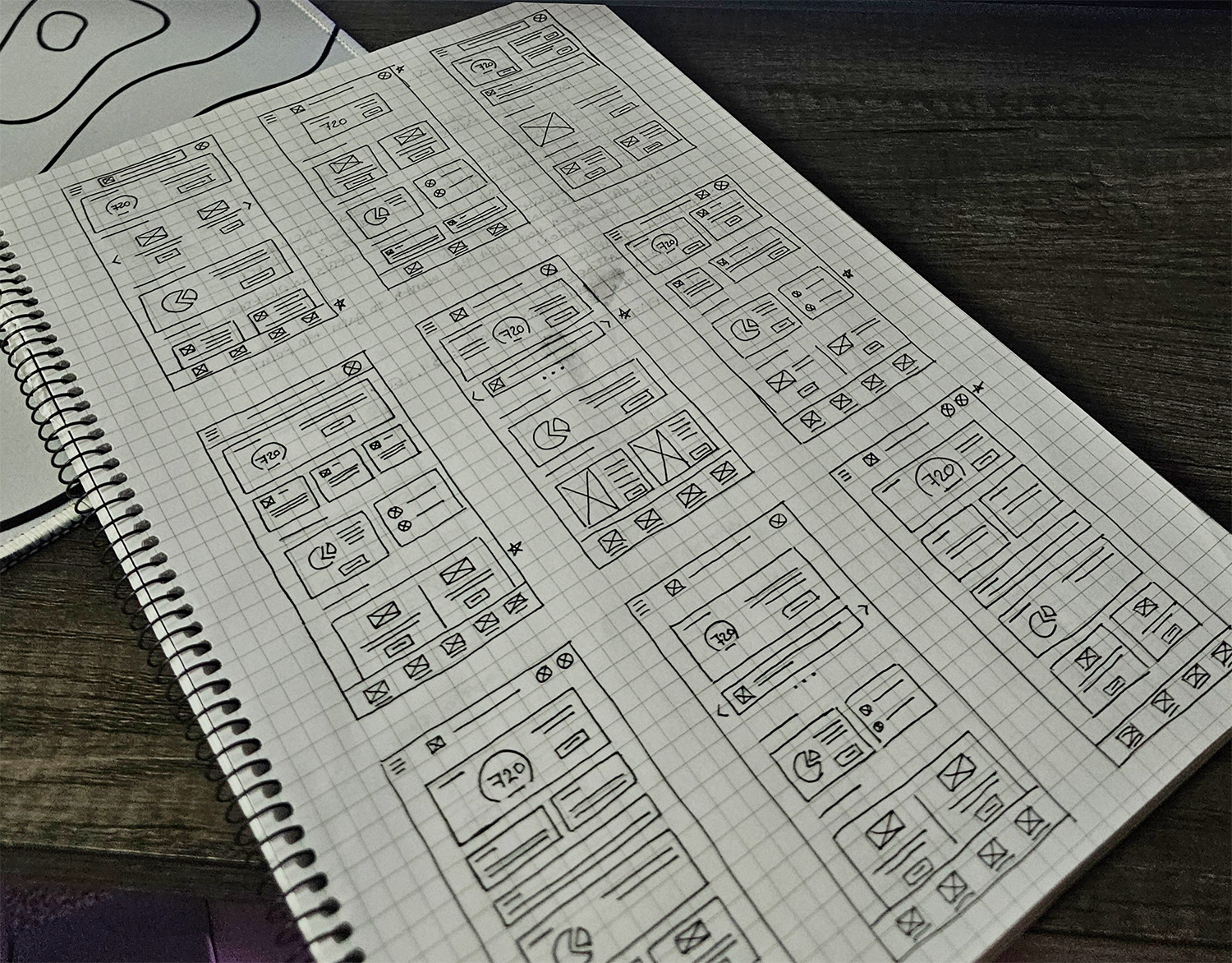
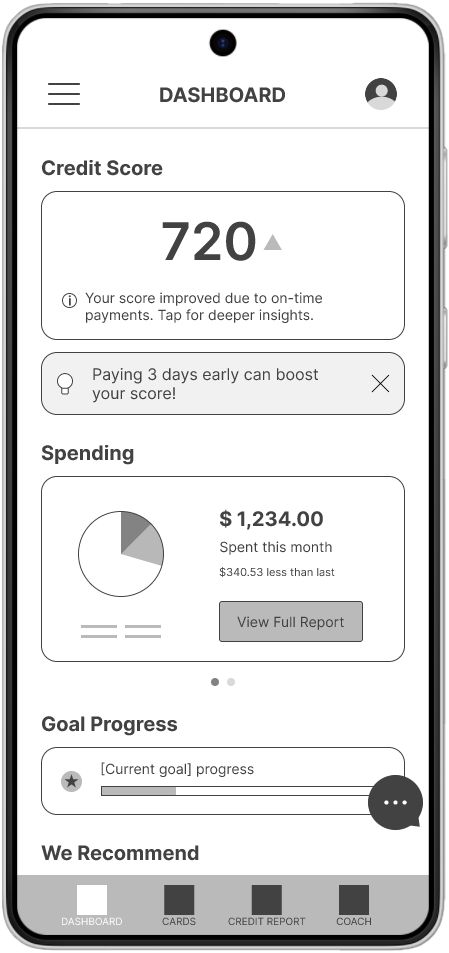
I kicked off with hand-drawn sketches to test hierarchy, layout, and flow. The focus was making key credit info easy to see right away while keeping secondary details accessible without clutter.
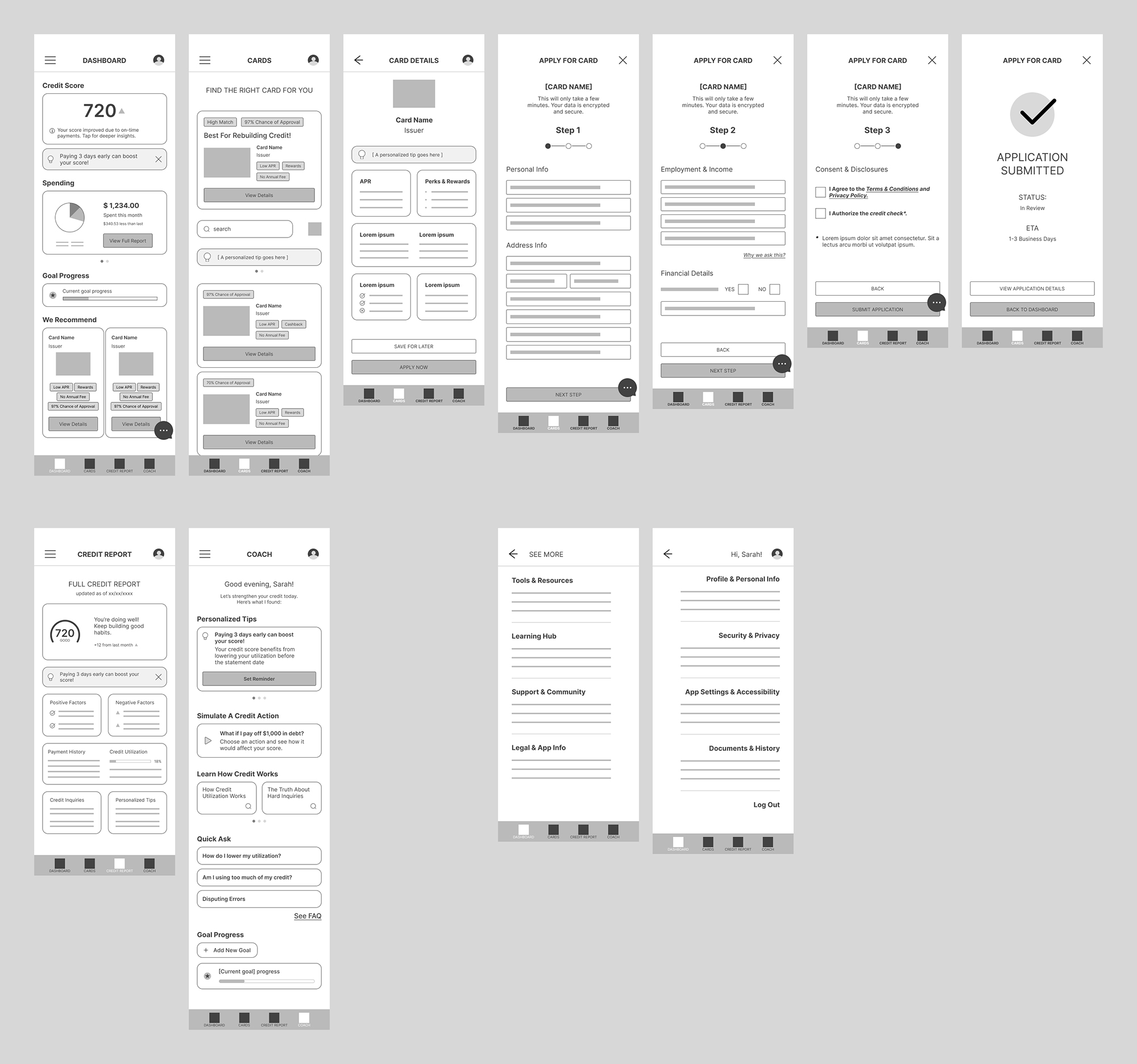
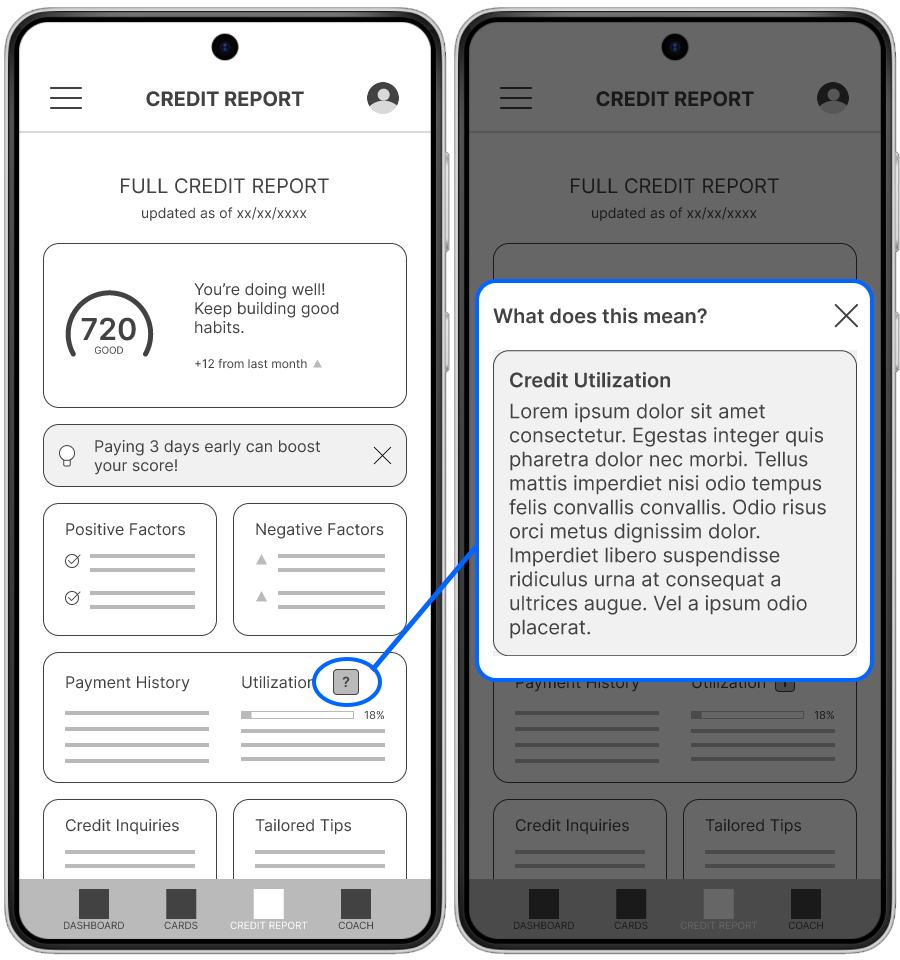
Once the core structure worked, I moved into low-fi wireframes in Figma. This made it easier to iterate flow and layout before major visual styling.
Here is what the earliest user flow looked like on low-fidelity wireframes.
Usability testing in this conceptual study involved one moderated session where the participant completed key tasks like interpreting a credit score, comparing card options, and using the Coach feature. The goal was to observe points of confusion and reactions to prototype interactions.
The moderated session focused on two tasks:

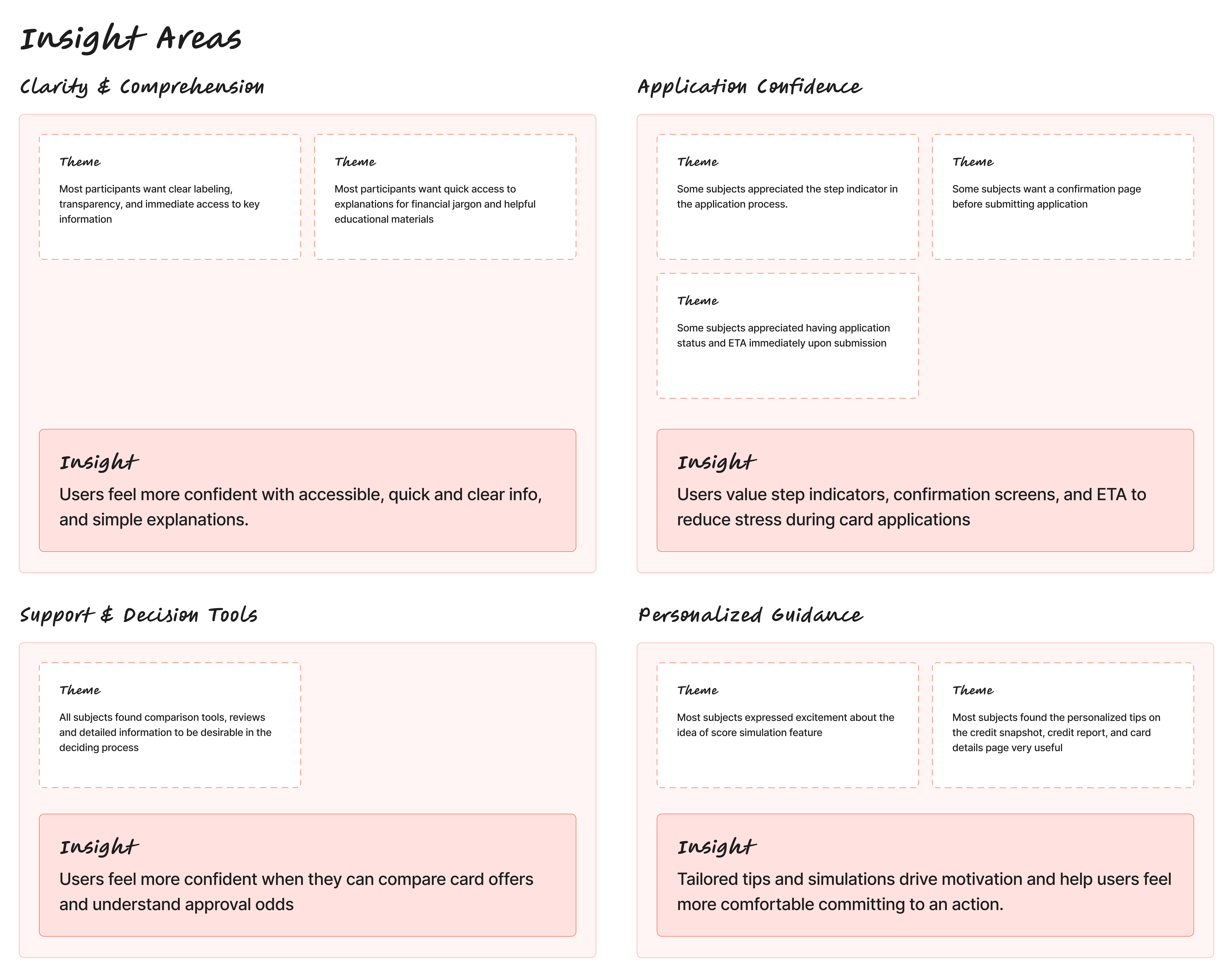
Insight: Users Feel More Confident with Accessible, Quick and Clear info, and Simple Explanations
The participant felt more comfortable with clear labeling, transparency, and immediate and easy access to information and explanations.
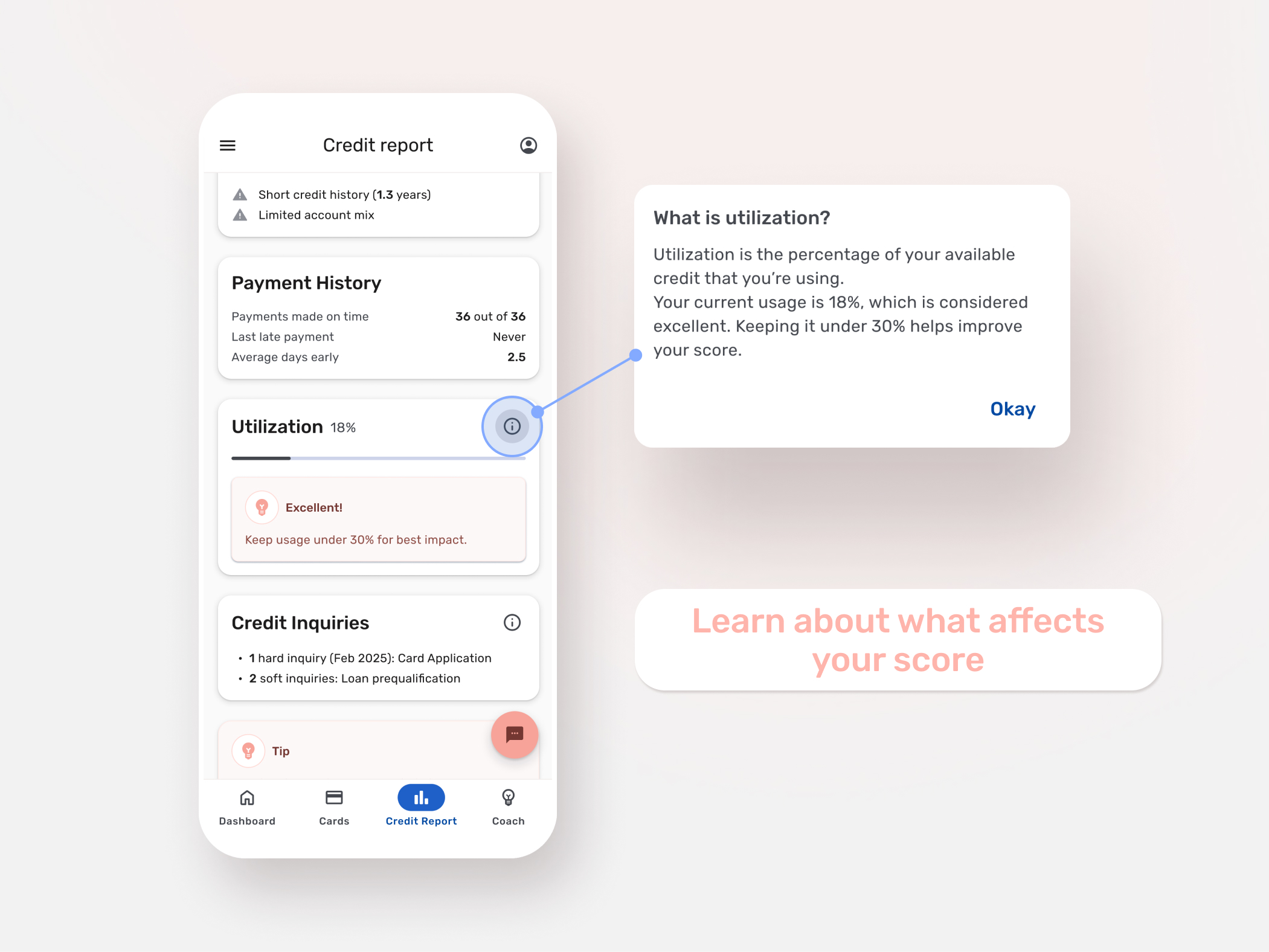
Answer: I prioritized score visibility and placed guidance messages directly on the dashboard. I also added inline explanations, tooltips, and plan language guidance throughout the app.


Insight: Transparency Increases Confidence During Applications
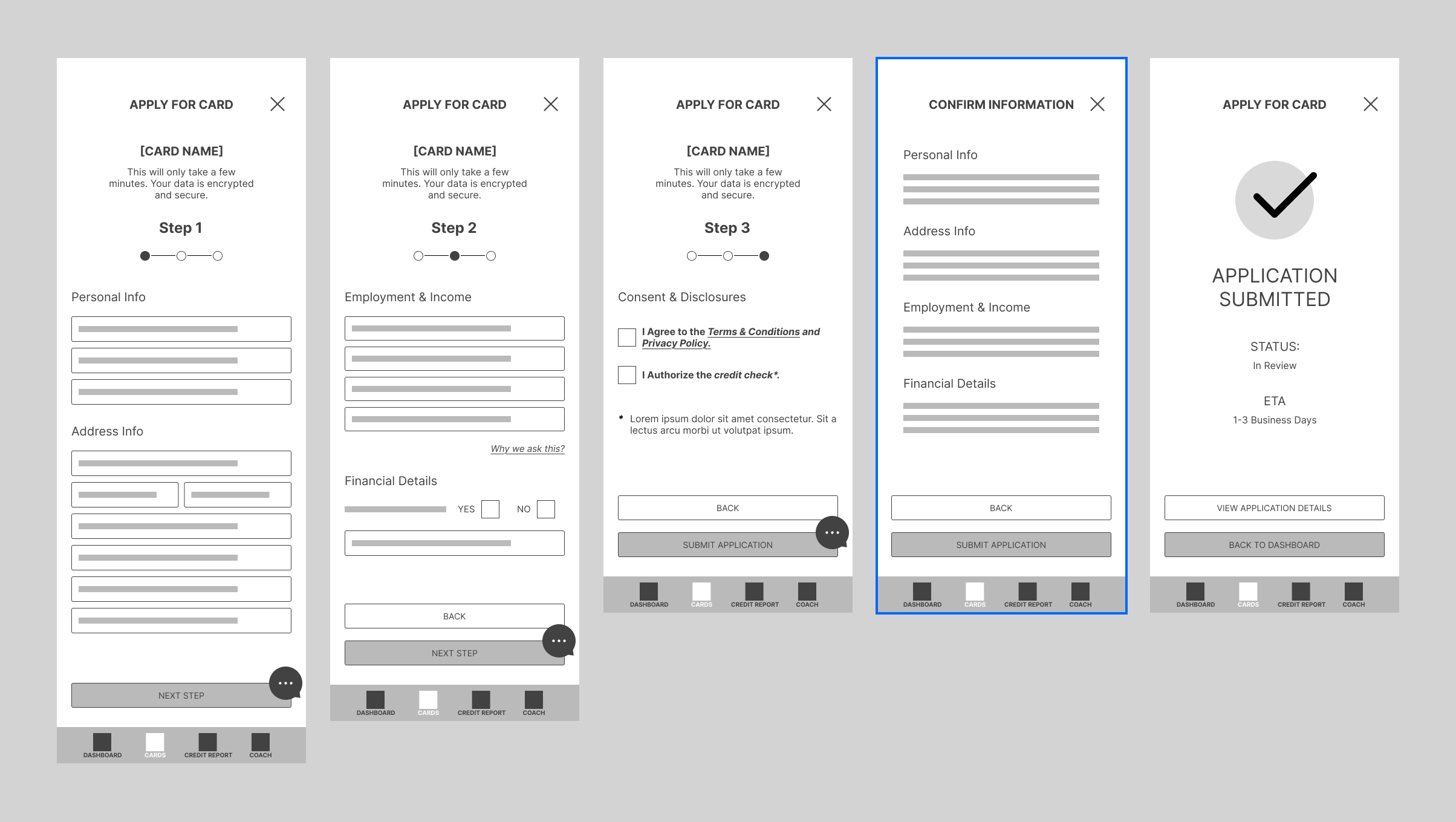
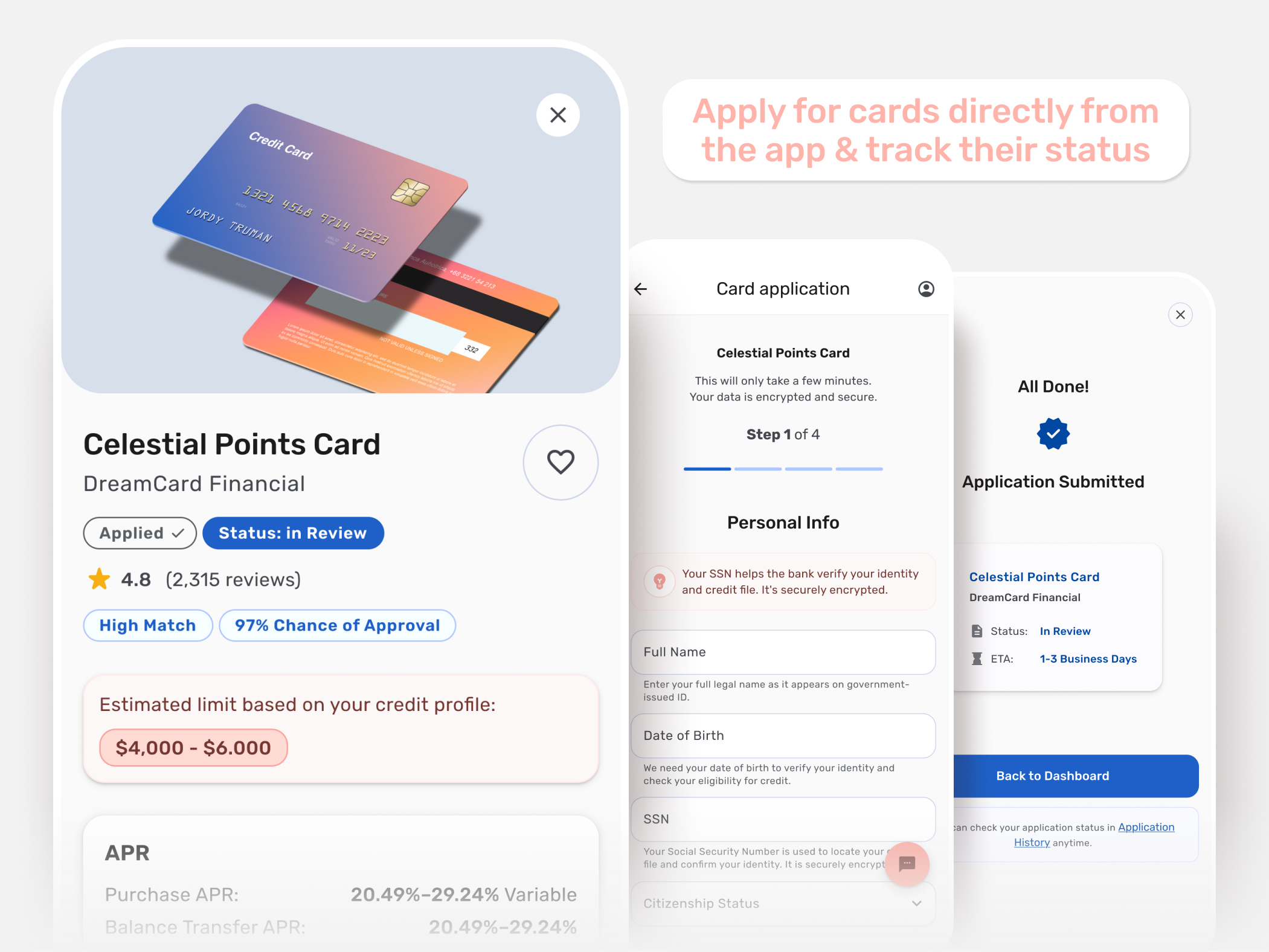
The participant appreciated the step indicators during the application flow, but felt uncomfortable with the lack of confirmation screen before submission.
Answer: Kept the step indicators, application status and ETA, and introduced a confirmation screen.
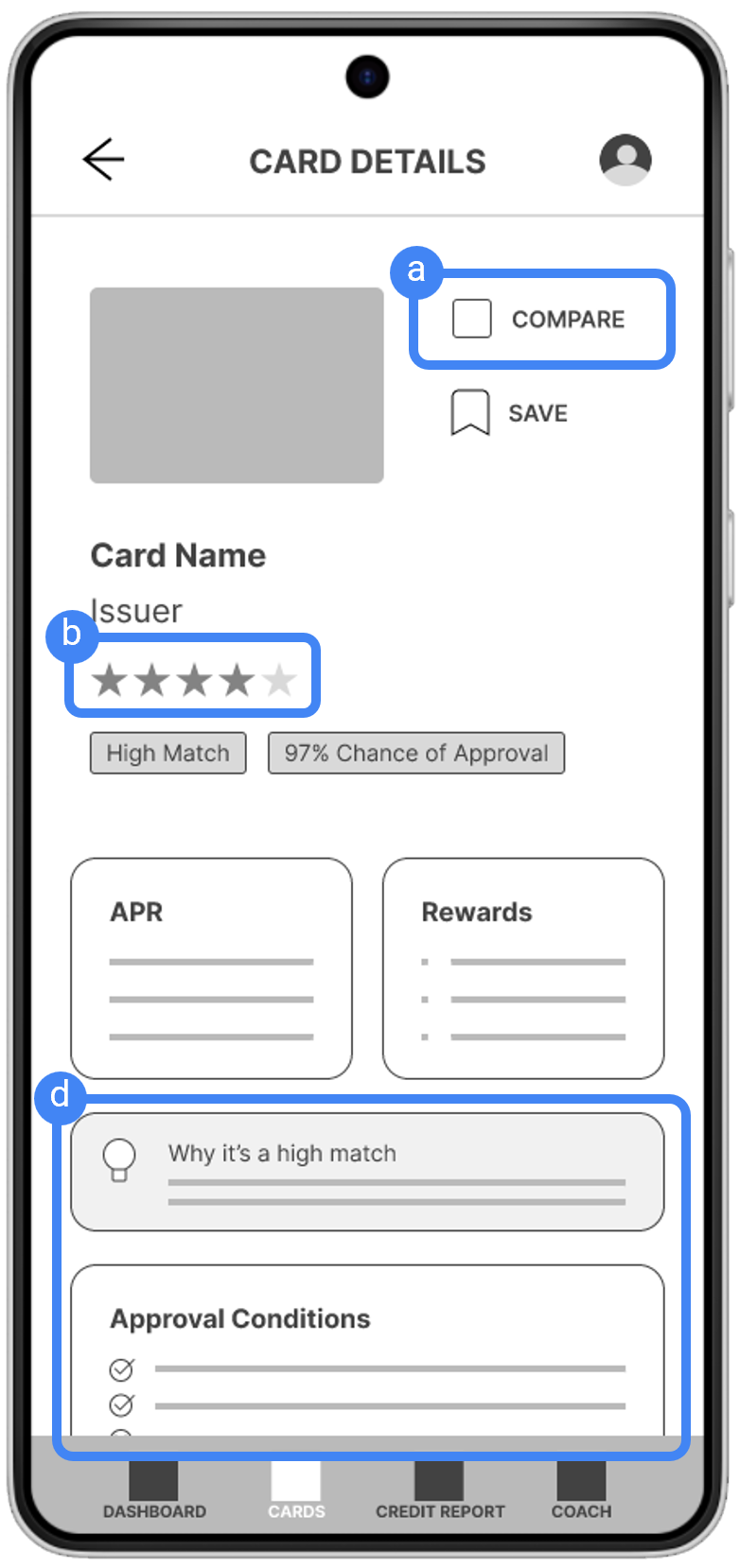
Insight: Users Need Better Tools to Help Them Make Informed Card Choices
The participant feels more confident when they can compare card offers and understand approval odds.
Answer: Added a comparison feature, card ratings, and match criteria and approval chances explanations.
Insight: Personalized Guidance Motivates Action
Tailored tips and simulations drive motivation and help users feel more comfortable committing to an action
Answer: Expanded the Coach feature to include actionable advice, reminders, and encouragement.

Low-Fidelity prototype.
The final UI brings clarity, confidence, and calm language together. It uses a clean hierarchy, controlled spacing, and intentional interaction patterns so users spend less time guessing and more time acting.
This project suggested that emotional reassurance and clear contextual feedback could reduce anxiety. In future, broader testing would be needed to validate these patterns across a wider user group.